People
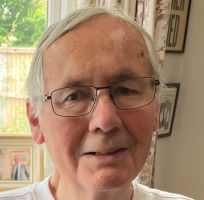
Obituary-Peter Gregson, a top Reuters correspondent
Tuesday 9 June 2026
Peter Gregson, who has died aged 80, was a top correspondent for Reuters for more than 30 years, reporting from Asia, Africa, the United States and London.
Peter, who died in hospital near his home in Amersham north of London on June 5 after a long period of ill health, covered global luminaries including Nelson Mandela, Margaret Thatcher and Henry Kissinger.
An accomplished editor and writer, he was one of Reuters most-travelled correspondents and his notebook was filled with contacts from around the globe. He had five postings in Africa and spent several years covering the tumultuous end of white rule in Zimbabwe and South Africa.
Gregson joined Reuters in London as a graduate trainee in 1966. A year later, he was shipped out to Singapore, an exotic first assignment for the lad from Warsop, a dreary coal-mining town in the English county of Nottinghamshire.
After a brief posting in Hong Kong, in 1970 he had the first of his African postings, to Nigeria, before moving to cover South Africa at the height of brutal apartheid.
He was assigned to Peking (now Beijing) in 1972, and his first job was to help cover the historic visit to China of U.S. President Richard Nixon, ending decades of mutual hostility and isolation.
On a brief R&R break in Hong Kong, a Reuters executive asked him to meet someone near the U.S. embassy who asked Peter to be his "eyes and ears" in Peking, in what Peter believed was a vain attempt by the CIA to recruit him. In a later personal memoir, he related how furious he was with his Reuters colleague.
He moved to New York in 1974 and the following year to Washington, which was in turmoil from the Watergate scandal.
Peter recalled an occasion in 1977 when secretary of state Henry Kissinger entered the State Department lobby, expecting the usual mob of reporters but finding it almost deserted. Kissinger, not one to shun the limelight, asked Peter where everyone was.
"I'm afraid you won't make the TV news tonight, Mr Secretary," Peter told him. "Why?" said Kissinger. "Elvis Presley's dead," Peter said.
The Camp David Middle East Summit and the aftermath of the Vietnam War were among the big stories he covered before he took up a posting back to South Africa in 1978.
His stories there included Zimbabwe independence in 1980 and President Robert Mugabe’s subsequent assault on the Ndebele ethnic group in which 20,000 civilians are estimated to have died.
He became Chief Correspondent for Southern Africa, based in Harare, in 1984-1987 before returning to London as UK Chief Political Correspondent.
It was a turbulent time in the UK which included bombings by extremist Irish republicans, protests and riots against a new “poll tax” planned by Margaret Thatcher’s government, and the Lockerbie plane bombing.
Gregson accompanied Thatcher on many of her foreign trips. In an interview on one flight in 1990, he asked the “Iron Lady” what she thought would be the next global flashpoint. "The rise of Islamic militancy," was her prescient reply.
In 1991 he was back on the World Desk in London, with a seven-week stint in Baghdad to cover the Gulf War after Iraq’s invasion of Kuwait. Later that year, he was appointed London Bureau Chief.
In 1994, he returned to Johannesburg again as Southern Africa Bureau Chief. The following year President Mandela asked to meet him, a huge scoop at a time when the world’s media were clamouring to interview the charismatic South African leader. 
In his memoir Peter related how the hour-long interview got off to a good start when they both realised they had the same eye consultant.
Peter had to leave that posting early because of health problems and back in London was given the unenviable, but important task in 1996 of compiling the annual report for Reuters. It was rated the best written report of the biggest 500 companies in Europe.
Gregson retired in 2000, but he remained a loyal committee member of the Reuter Society until shortly before his death. A big cricket fan, he had a season ticket to London's iconic Lords ground.
A regular at meetings of the Short Club for former Reuters journalists in London, he enjoyed regaling his mates with humorous anecdotes of his life at Reuters, and was a regular contributor to the pages of The Baron.
He is survived by his wife, Gun-Maj, children Simon, Annika and Martin, and seven grandchildren.
■
- « Previous
- Next »
- 26 of 635