The Baron's Briefings
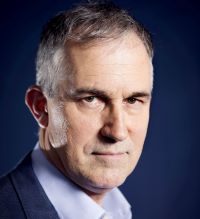
Far right victory in French elections would be an 'earthquake' for Europe - Victor Mallet
Tuesday 31 March 2026
The predicted victory of the far right in France’s presidential election next year would cause an “earthquake” across the European Union and NATO, Victor Mallet told the latest Baron’s Briefing.
Mallet, who began his journalism career at Reuters in France, is now a senior editor on the Financial Times world desk after four decades covering Europe, Asia, the Middle East and Africa. He has just written a new book called Far-Right France: Le Pen, Bardella and the Future of Europe.
He told the briefing on March 26 that Marine Le Pen’s Rassemblement National (RN) “is massively, massively popular” and the biggest single party in both the French and European parliaments.
Opinion polls predict it will win both the presidential election next year and legislative elections that a new president would almost certainly call immediately afterwards.
“If the RN takes power, it will be an earthquake for Europe and for NATO…the impact on European institutions would be immense, especially if far right parties took power in other countries on the continent,” he said.
The Eurosceptic RN would seek to undermine the EU from within and might prove to be an uncomfortable NATO partner for other members of the alliance given Le Pen's past sympathies for Vladimir Putin and Russia.
It would try to change the French constitution in a referendum to remove automatic citizenship for children born in France with foreign parents, Mallet said.
The RN wants to change the republic’s core principle of liberté, égalité, fraternité so that it would only apply to French citizens instead of being a universal concept of human rights and freedom. State benefits would be removed from non-citizens.
Mallet said that the RN was a much older, more rooted party than some of the populists on the right rising in other European countries, like Germany, Spain and Britain, and had a more sophisticated array of policies, including on the economy, rather than focussing only on immigration.
It was not particularly conservative culturally, does not oppose abortion and has gay members of parliament. Le Pen, a “wily politician who gets on easily with anybody” had been a single mother and is twice divorced.
The party has become much more respectable under Marine than her rabble rousing father Jean-Marie, its co-founder. Its voters were not the neo-fascist thugs of the liberal imagination but ordinary people, Mallet said. “Butchers, bakers, accountants and farmers”, including many who used to vote for the Left.
He said the centre of French politics, as in other European countries, has been hollowed out, with traditional parties now very weak. The rise of the RN had been helped by the same complacency in the centre that had enabled Brexit and the rise of Donald Trump, as well as populist parties elsewhere.
Le Pen is unlikely to be able to stand in the presidential election because of a conviction for embezzling political funds from the European parliament. Although she has appealed, the party’s candidate is likely to be her protégé, 30-year-old Jordan Bardella.
Mallet said Bardella’s political skills should not be underestimated despite his youth and lack of traditional political credentials.
However, he added that there were still some factors that could derail the far right, including even more controversial moves by Trump, with whom the party is associated. So far the RN has so far not been damaged by Trump, according to opinion polls.
A more blatant new move by Russia against Europe could also move the dial, with voters looking for a more established, respectable and diplomatic figure like current President Emmanuel Macron -- who cannot stand for a third term -- to face the threat.
Even without these factors, voters might hesitate to elect Bardella in the second round of an election for the prestigious role of president, if a credible centre-right candidate emerged.
But at present there are few candidates for that role, with the possible exception of Edouard Philippe, mayor of Le Havre and Macron's prime minister at the start of his first term, Mallet said. ■